HISTORY OF LA FONDA DE LOS PRÍNCIPES
The Opening
Opened on October 1st, 1861, during the reign of Queen Isabella II, La Fonda de los Príncipes was one of the first—and most luxurious—hotels in 19th‑century Madrid, becoming a landmark of the city's hospitality.
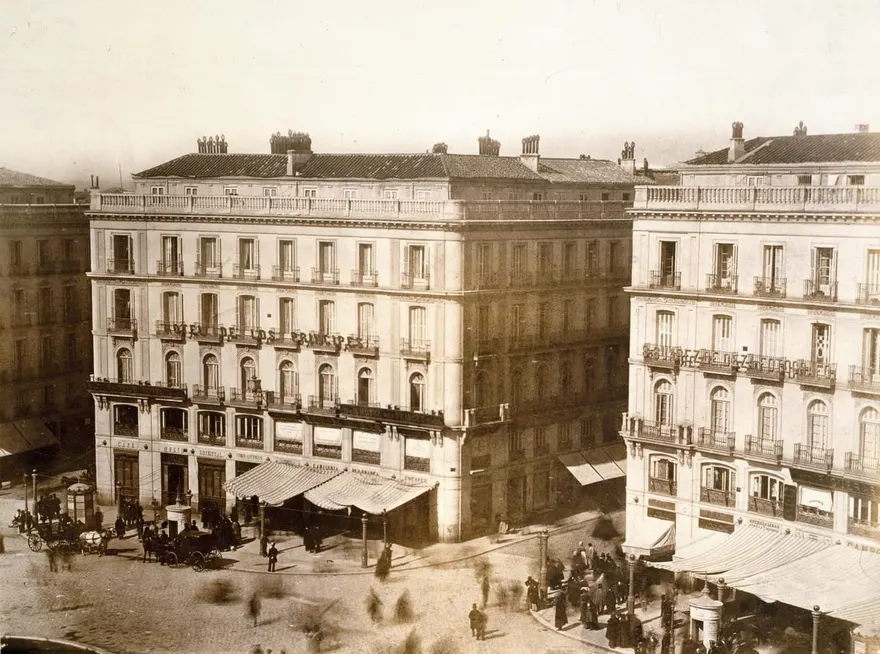
It was the first grand hotel to open on Puerta del Sol after the major redesign of the square that began in 1857. The surrounding buildings—nearly uniform, 30 meters tall, with eclectic "Isabeline" architecture and a hint of Paris—were built in 1860 by Lucio del Valle, Juan Rivera and José Morer.
Our building at Puerta del Sol 11 was purpose‑built as a top‑category hotel. La Fonda offered European‑style comfort and luxury, with rates unmatched in the city. For its time, it was a very expensive stay and travel guides described it as a "Grand Fonda of the First Order."
Contemporary chronicles—such as those by Fernández de los Ríos—highlighted luxuries rarely seen in Madrid: private baths, an à‑la‑carte restaurant, reading salons, a piano and views over the square.
The Hotel Square
Travelers seeking simpler options had other inns: the Fonda de San Luis on Calle Montera; the Fonda de las Diligencias Peninsulares (1850) on Calle Alcalá; or, on Calle Arenal, the Gran Hotel de Oriente (1855).
Later, in 1864, the Gran Hotel de París opened at Puerta del Sol 10, and in 1870 the Hotel del Universo at number 14.
These historic lodgings were built around Puerta del Sol to serve travelers arriving by carriage and stagecoach. In fact, the Fonda de las Diligencias Peninsulares belonged to the coach company itself, created to host its passengers.
Sadly, almost all those buildings have disappeared. Only two remain: La Fonda de los Príncipes and the former Gran Hotel de París. The Gran Hotel de París ceased operations in 2006 and today houses the Apple Store.
La Fonda de los Príncipes is the only historic lodging in Puerta del Sol to have hosted guests continuously since 1861.
What made La Fonda famous remains unchanged: its balconies with the best views over Puerta del Sol. Writers and artists drew inspiration from them—Hans Christian Andersen, Henry Blackburn and Jorge Luis Borges among them. In 1866, Blackburn described his afternoons watching the lively square. Learn more about these memorable travelers.
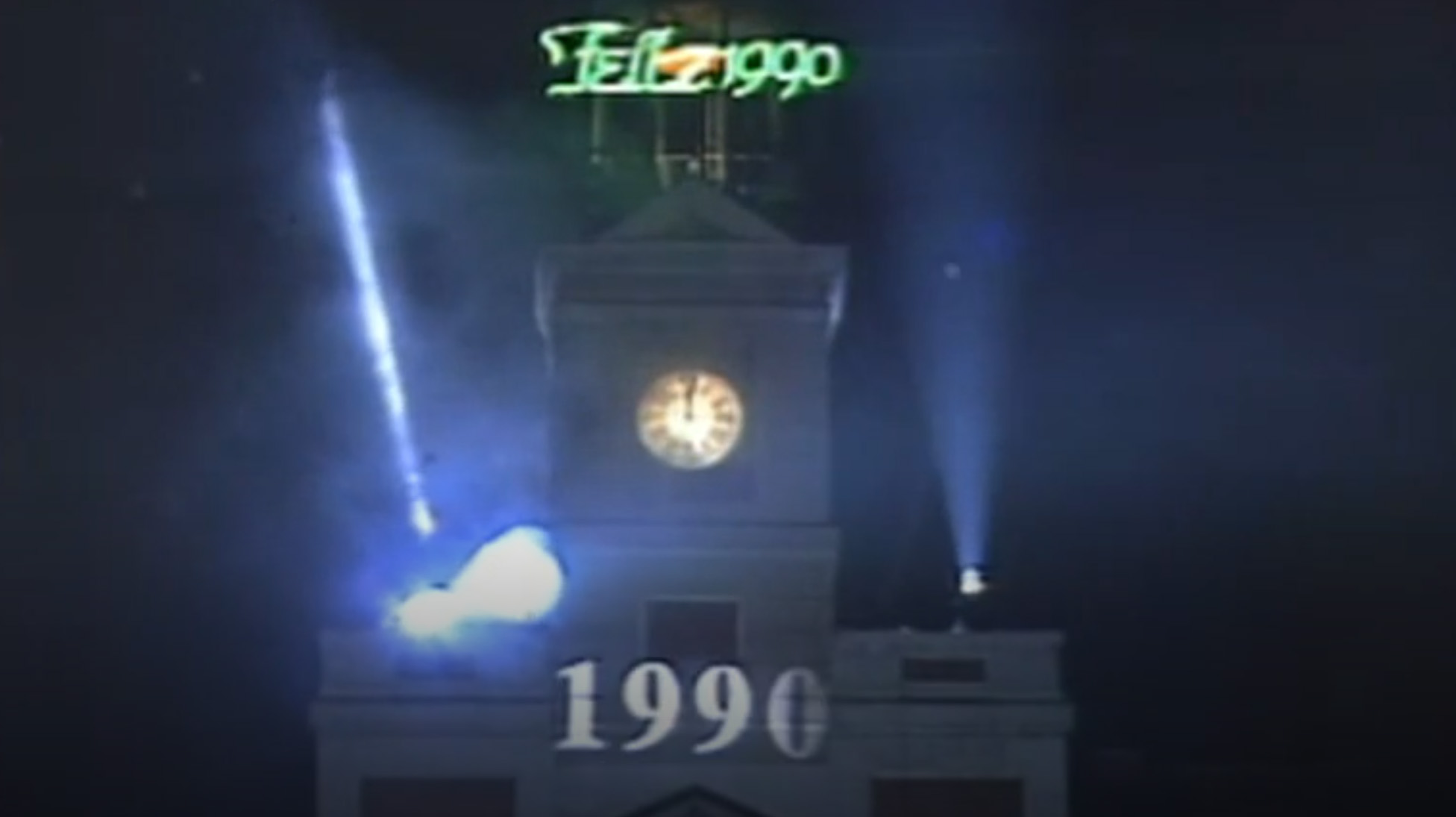
These balconies are also the place where every year, on December 31st, different television networks broadcast the New Year's Eve bells to all of Spain. Learn more about the bells and our balconies.
When La Fonda opened, Puerta del Sol's main attraction was the "Fuente del Chorro." Installed on June 24th, 1860 (now gone), it was part of the project to bring water to Madrid. Officially called Fuente de la Buena Suerte, it was popularly known as Fuente del Chorro because its jet reached up to 30 meters, misting the entire square.
The Name Changes
While its views endured, what changed over time was the name.
The word "fonda," associated with prestige and royalty, was replaced in late 1860 by "hotel." Madrid wanted to resemble Paris, and "hotel" carried the French connotation of high‑class lodging. In 1862 the first name change came, as Hotel de los Príncipes set out to compete with the decade's major openings: Gran Hotel de París and Hotel del Universo—turning the square into a premier hospitality hub.
With hotel luxury came popular cafés. Shops, boutiques and cafés settled in the ground floor of Hotel de los Príncipes. Two of the best‑known were Café Oriental and, more importantly, Café de Correos—open 24 hours and frequented by figures such as Azorín and chronicler Pedro de Répide.
Around 1875, the hotel changed names again: Hotel de los Príncipes became Gran Hotel de la Paix. The change was said to attract English and French tourists—"Hotel de la Paix" was common in European capitals and evoked continental comfort standards.
With the 20th century came modernity: French influence gave way to fascination with America. Another name change followed, from Gran Hotel de la Paix to Gran Hotel Americano. The hotel adapted, adding telephones and electric elevators.
Pensión Americana
After World War I, economic decline and the opening of more luxurious hotels (like the Ritz) forced Gran Hotel Americano to lower its category, becoming Pensión Americana and seeking long‑stay guests. During this period, Jorge Luis Borges stayed here with his family and began writing his early Ultraist poems.
As the decade progressed and the economy improved, the property regained momentum and, in 1930, became known again as Hotel Americano.
The Civil War
The Spanish Civil War marked the end of Hotel Americano and the square's grand luxury hotels. Between 1936 and 1939, Puerta del Sol suffered heavy bombardment and our building was severely damaged—especially the façade facing Calle Tetuán.
Once repaired, the post‑war economy could not sustain this kind of lodging. From mid‑century onward, the "Grand Hotel" disappeared, fragmented into shops, offices, homes, boarding houses and more modest hostels.
Hostal Americano
The Hotel Americano name continued until the 1960s, when new regulations required it to be reclassified as a hostel. From that point on it became Hostal Americano.
Throughout the rest of the 20th century, Hostal Americano was a central and affordable place that attracted middle‑class tourists, families from the provinces and even students. While it gradually forgot its glorious past, and other units of the building changed owners and uses, the hostel survived—until Covid, when debts finally forced it to close.
In 2024, the hostel changed hands in an effort to recover its former glory.
After more than 18 months of renovation, on January 5th, 2026, La Fonda de los Príncipes was reborn, honoring its original name.
Welcome to La Fonda de los Príncipes—the only lodging that has survived on Puerta del Sol since 1861.
Gran Hotel de la Paix · Puerta del Sol, 11 & 12
This first‑class establishment, opened since last November, can compete in every respect with the best in Paris and London. Entirely newly furnished, with its four façades and 120 balconies onto the street, and its exceptional location at the very center of Madrid, it offers travelers every condition of comfort and luxury they may desire. —Comfortable rooms for families and distinguished guests. —Table d'hôte, the best in Madrid, and private dining rooms. —Meeting room with balconies over Puerta del Sol. —Reading room with the most important newspapers in Europe. —Interpreters. —Luxury carriages. —Omnibus. —Bathrooms in the house for the exclusive use of travelers.
This hotel and the Hotel de Londres are the only French hotels in Madrid.
National Library of Spain, July 1876